At school we are told that long time ago, ancient people
looked up in the sky and started associating patterns to mythical persons and
other characters. However, you are probably intrigued with the fact that most
of these constellations don't look like what they are named for (true if you
have no experience, but some constellations such as Orion the Hunter, Canis
Major the Dog, Scorpio the Scorpion and the Crowns - Corona Australis in the
South, Corona Borealis in the North actually look like what their name tells
you), which makes locating these star patterns difficult.
Below are tips
to help you locate these constellations, based from my experience:
Make sure you're in a dark place. Light from street lamps or
other sources outshines most of the fainter stars, which makes some of
constellations hard to locate.
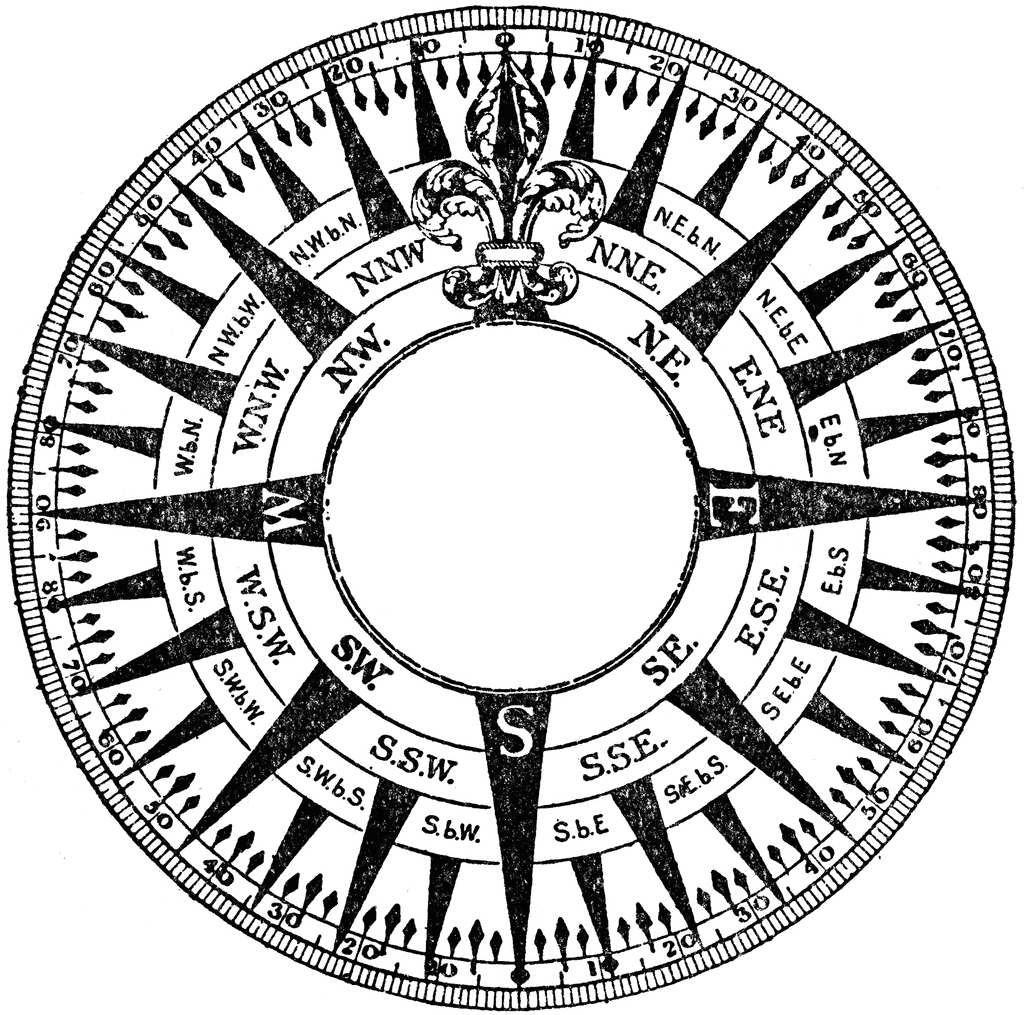
Know the cardinal directions (North, South East and West).
Knowing these directions makes everything easier, especially that star maps use
these directions.

Be patient. To see some stars, you'd have to squint hard,
and crane your neck in quite uncomfortable orientations.
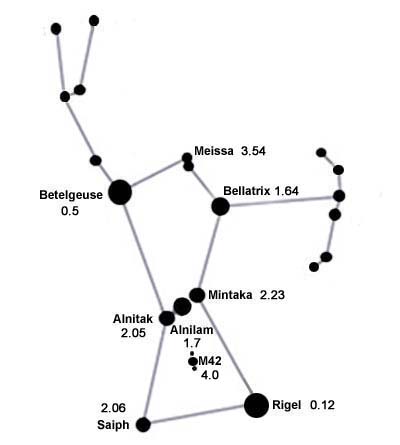
Note the brightest stars in the constellations to make
locating them easier next time. For example, Antares, the red giant star in the
constellation Scorpio, is the heart of the scorpion. Rigel is the right knee of
Orion, and Betelguese is his left shoulder.
Secure star maps. Click the link at the side to download the
star maps I use (http://people.ece.cornell.edu/land/courses/ece4760/FinalProjects/s2007/iq23_tg67/iq23_tg67/starchart.pdf). Just follow the instructions. :) When using
these maps while star gazing, use red light so your eyes would find it easier
to adjust to the change from the dark sky to the star map.
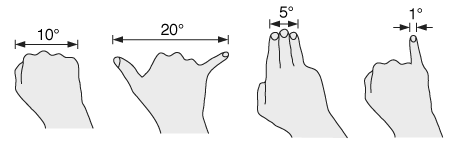
It is also helpful to know basic degree measurements (distances
in the celestial sphere, or the sky, are measured in degrees) .
Stories in the Skies
It would also
help you locate these constellations if you create mnemonics, or stories with
the constellations. Here are some stories I have created to help me remember
the relative locations of the constellations:
Bootes (marked by the star Arcturus) guards the Northern
Crown (Corona Borealis), holding it in his left hand. Serpens the Snake tried
to steal the crown from Bootes, but good thing Ophiucus was able to hold him.
(The Snake's head, a triangle, is located near the crown while Ophiucus is
located around the body of the snake.) Scorpio tries to help Serpens (the rear
end of Serpens is parallel to Scorpio's torso) but justice wouldn't allow it
(Libra the scales can be seen near
Scorpio, whose pincers are ready to grab Libra anytime). Meanwhile the Southern
Crown is left unnoticed by Scorpio (the crown is directly "behind"
Scorpio's lethal stinger) which leaves Sagittarius' job as it's guard easier
(Sagittarius is located above the Southern Crown).
Orion the hunter is followed by his trusted hunting dog
Canis Major (marked by Sirius, the brightest star) while the Lepus the rat
scurries below him. Orion is hunting Taurus the Bull (it could be seen that
Orion is facing the Direction of Taurus (marked by Aldebaran). Meanwhile the
Twins (Gemini, marked by Castor and Pollux) lie above left Orion the Hunter.
Aside from
these stories, these "markers" will help locate other constellations:
If you could locate Orion (famous for his belt, also known
as the Three Kings), then you could use the belt to locate Sirius, the Dog star
(brightest star). The belt points directly due west to Sirius, which is the
neck of Canis Major and points due east to Aldebaran.
The Big Dipper's side (not connected to the handle), points
to the North Star, Polaris which is the tip of Little Dipper's handle.
If you imagine a hole in the Big Dipper's
"bottom", then the water would fall down to Leo (seen as an inverted
question mark with Regulus as the point).
Lyra (marked by Vega) is a trapezoid shaped constellation in
the north, with a handle (Vega). The two stars opposite each other aligned with
Vega in the trapezoid points due east towards Altair, which marks the
constellation Aquila the Eagle.
Tips for First Time Stargazers
Maybe on a
clear and moonless night, you have looked out of the window or perhaps, have
taken a walk outside and so to your delight the marvel of a star-studded sky.
The bright ones interspersed with the faint ones, all beckoning you to know
more about them, made you decide to make stargazing as your new hobby. And what
good choice, for it is always free (and contrary to what you might believe,
having your own telescope is not necessary, yet).
So if you're
up for it, here are some tips and ideas to keep you on the right track:
It is always good to start from the basics. As a beginner,
we always start with the lowest magnification (our eyes) before we proceed to
the next stages.
Know how to use star maps. These will help you familiarize
the different stars and constellations in the night sky. As a start, use the
SFA Star Charts available above. These are the ones I have used during my
starting days, and they were a great help.
Choose a dark place to view the stars, away from artificial
light. This will make the fainter stars visible.
One thing you could try to do by naked eye observations is
finding the 5 planets readily visible to the naked eye (Venus, Mars, Jupiter,
Saturn and Mercury). You'd be surprised how bright these "stars"
could have been, you might have seen them and never thought they could be
planets. Use finder charts to locate them, which are readily available in the
Internet.
If you are susceptible to insomnia, or just enjoy the wee
hours, there's one thing you could do to: Meteor Watching. There are specific
dates for the occurrence of meteor showers, and they are surely a lovely sight.
There's another "challenge": Try to see if you
could find the cloud-like outline of the Milky Way. (Clue: Look for it at the
vicinity of Sagittarius to Aquila and Cygnus.)
If you have access to really dark places away from light
pollution, try looking for faint fuzzy patches. Some are visible to the naked
eye, such as the Andromeda Galaxy or M31, and Praesepe or Beehive Cluster at
Cancer.
Be familiar with some basic astronomical terms such as
declination, right ascension and the ecliptic. Read more about stars and space
to supplement what you see in the night sky.
Have your own astronomy or star gazing journal to keep track
of your progress.
If you have sufficiently known enough about the sky with
what you could see, then you could move to the next thing: binocular
stargazing!
The most favorable binoculars are the 10 x 50s, although the
7 x 35 is a good way to start, and is cheap too. Actually, these are the ones I
have used to start, and they are certainly worth the price.
One challenging thing you could do with binoculars is the
search for Messier objects. You could download the Magnitude 7 Star Atlas as a guide for your search. You could also
use Karkoschka's The Observer's Sky Atlas (email me for a copy) as a comprehensive
guide. It contains finder charts for deep sky objects visible by the naked eye,
binoculars and telescopes.
Here is another amazing experience: view some of Jupiter's
Galilean moons (the Stars of Medici, if you prefer) using a pair of binoculars.
Most of the times you'd see either Europa or Ganymede.
